Thandiwe Muriu: the art of hiding in plain sight
The Nairobi photographer dresses women in the same fabric as the wall behind them, and somehow they're all you can see. How Camo took her from the city's fabric shops to Paris, Venice and Kyoto.
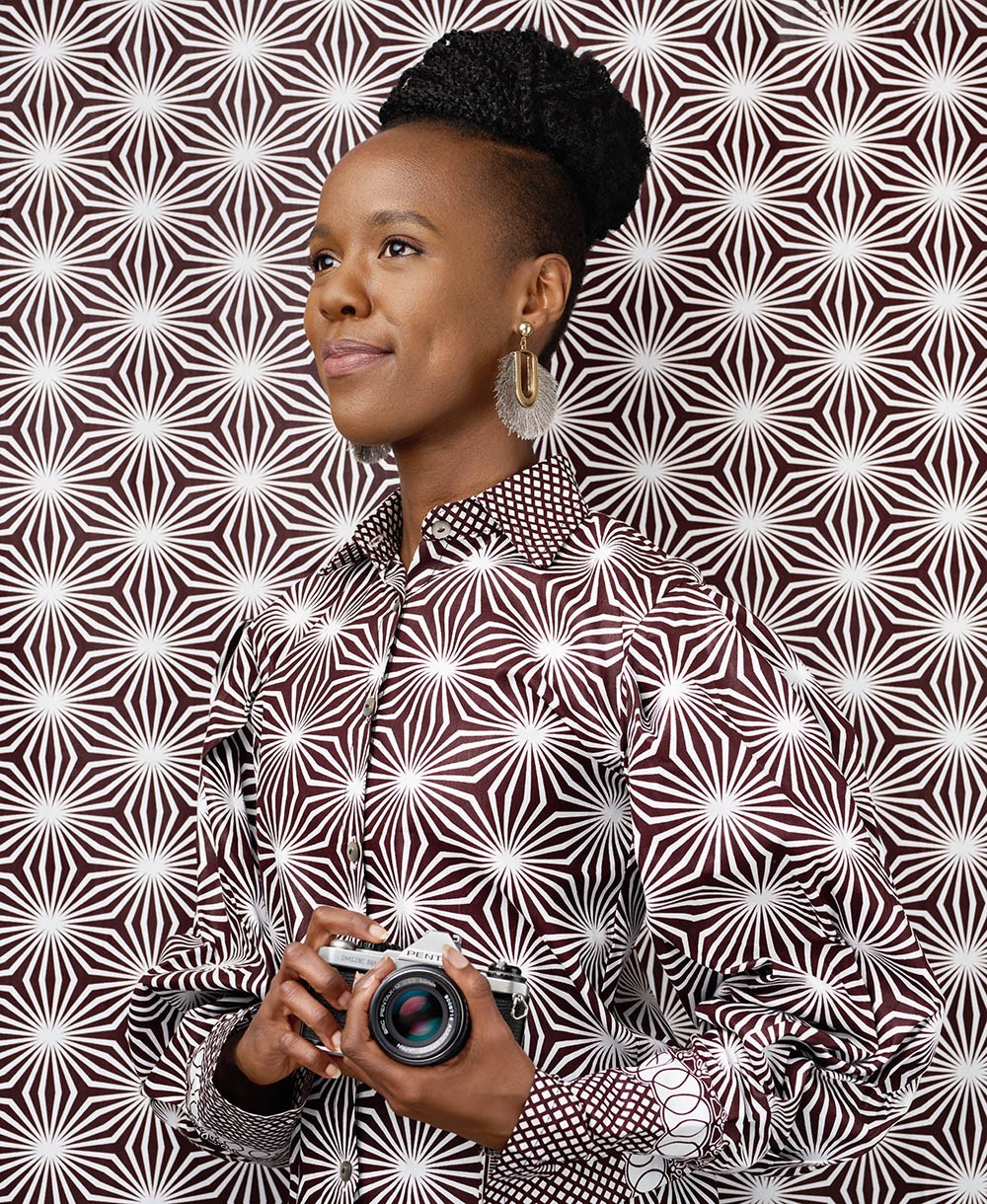
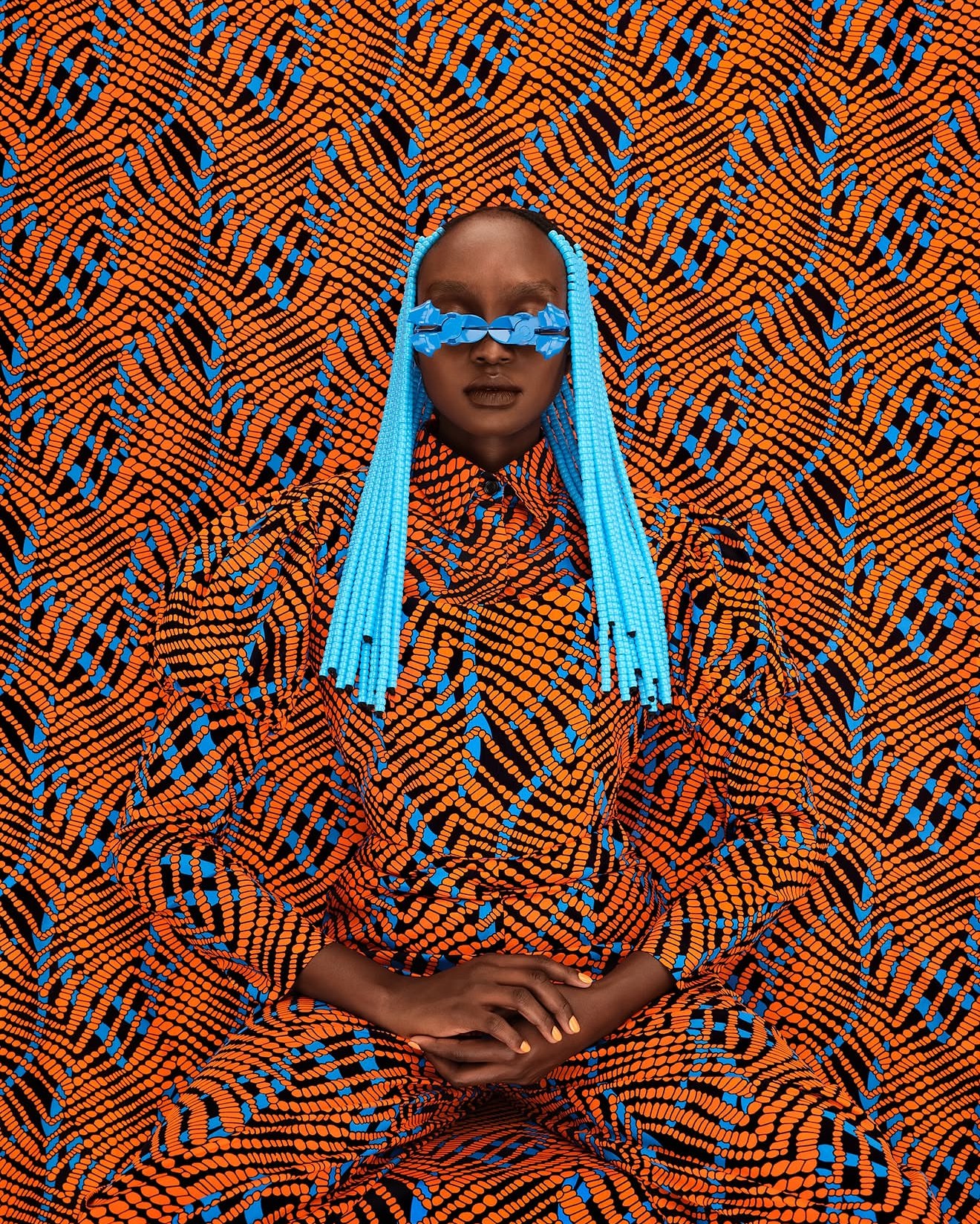
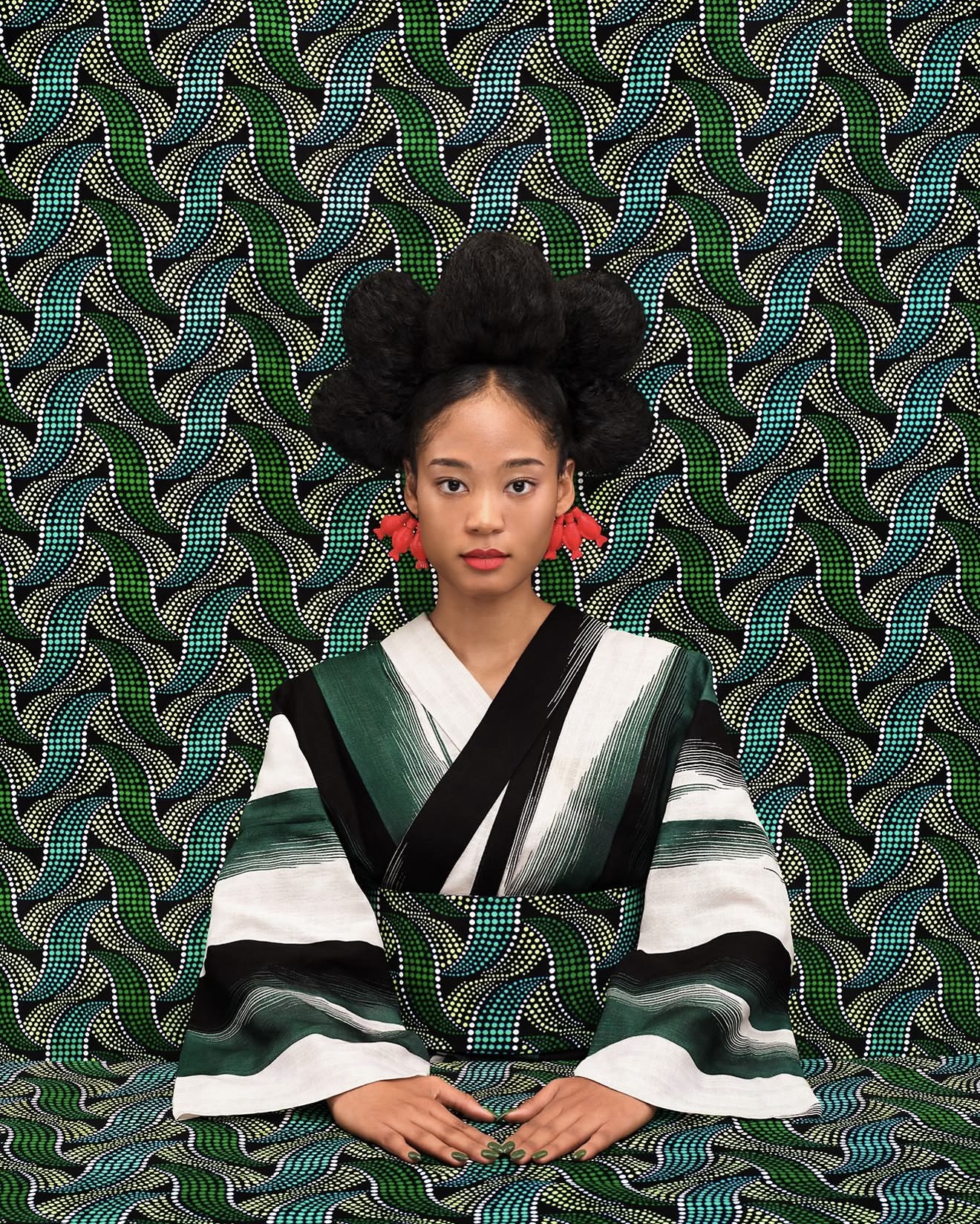
Look at one of Thandiwe Muriu's portraits too quickly and you might miss the woman in it. Her dress is cut from the same bold print as the wall behind her, the pattern running from backdrop to sleeve without a break. Then you catch her face, the sculpted hair, the glasses made from something you probably have in your kitchen, and suddenly she's all you can see.
That trick is the heart of Camo, the series that has taken the Nairobi photographer from the city's fabric shops to galleries in Paris and Venice, a book with Chronicle Books and, this year, a festival in Kyoto backed by Longchamp.
A camera at 14
Muriu was born in Nairobi in 1990 and still lives and works there. She taught herself photography, starting at 14 with her father's Nikon, and was working professionally by 17.
For years she shot commercial advertising work in an industry run largely by men. It kept pushing her to ask what role women are expected to play, where tradition fits in, and how she saw herself.
Camo, short for camouflage, grew out of those questions. She has described it as a personal reflection on how she felt she could disappear into the background of her own culture. Her models become part of the canvas and, at the same time, step out of it.
With a little seed of imagination, you can grow a field of hope.
African proverb, from Camo
Fabric, hair and a kitchen drawer
Every portrait starts in Nairobi's fabric shops, where she spends hours hunting for the loudest, boldest prints she can find. The series began as a way to celebrate African fabric, but she soon realised it had far more to say.
Then comes the hair. Before each shoot she researches traditional hairstyles from across Africa and designs modern versions for her hairstylist to build. The finishing touches are everyday Kenyan objects, soda cans, tea strainers, bottle tops, combs and straws, reworked into jewellery and eyewear: a nod to how resourceful people at home are with whatever is around them.
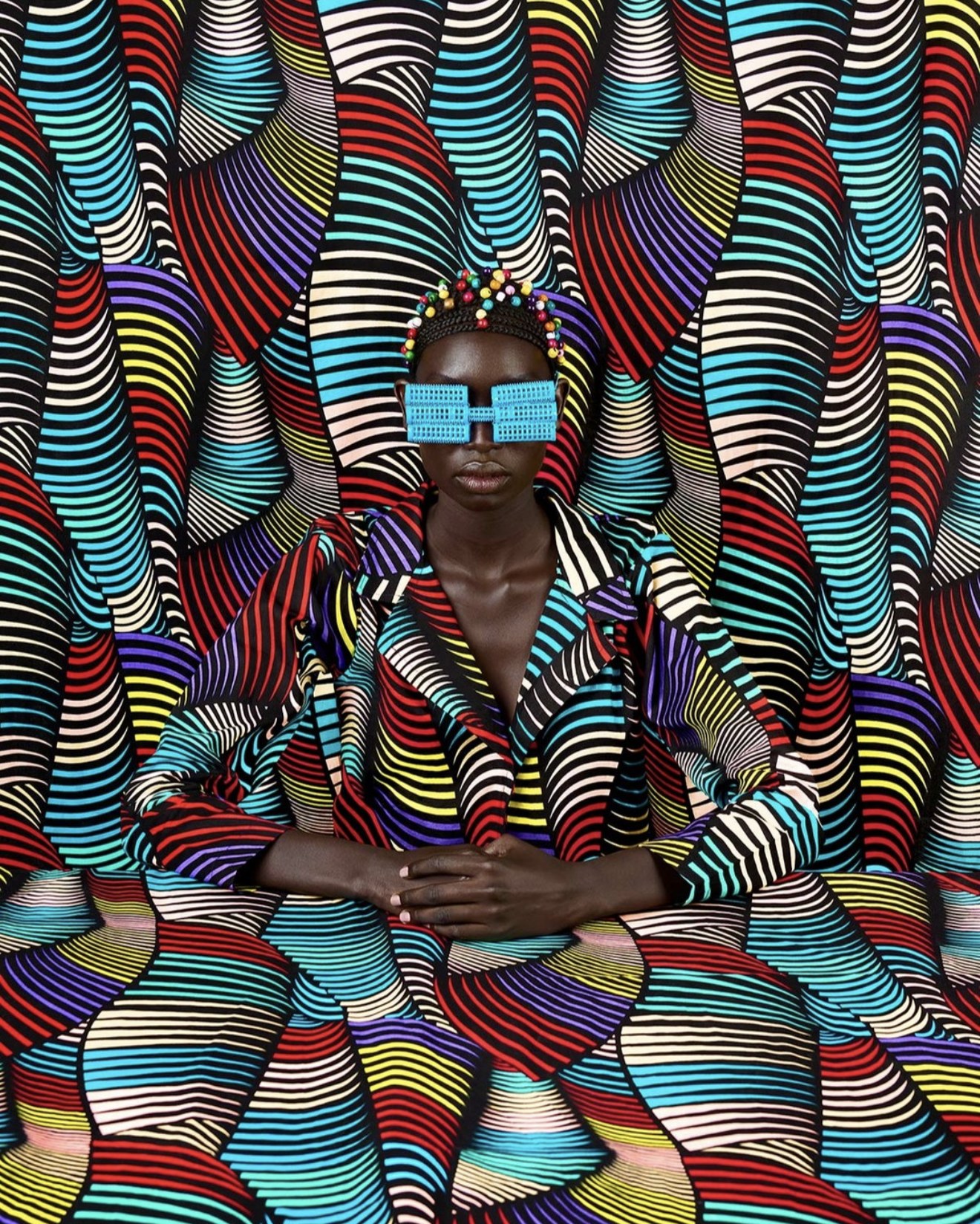
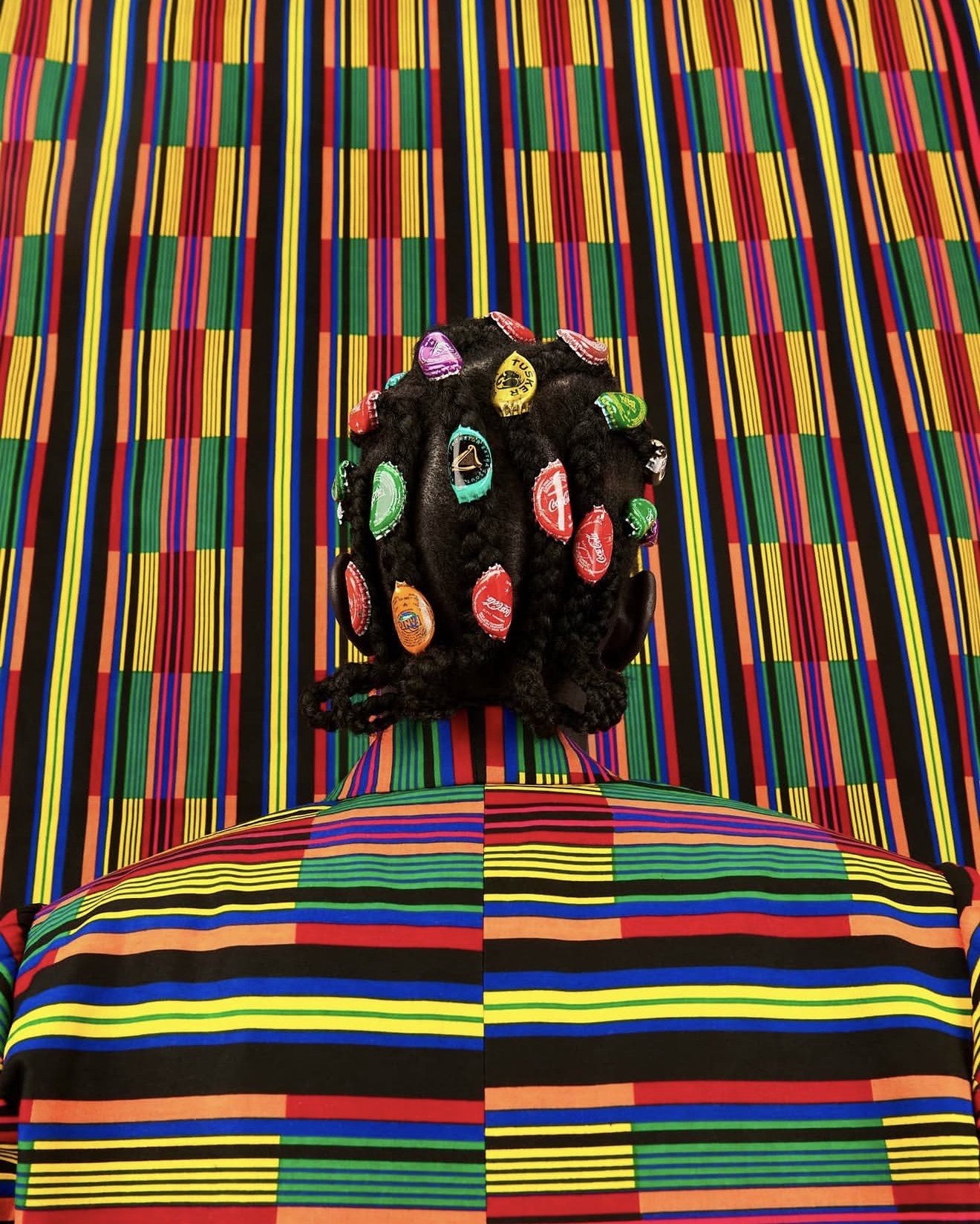
Each image also carries an African proverb, in English and Swahili, so the culture is heard as well as seen. In 2024 the series became her first book, Camo, published by Chronicle Books.
From Nairobi to Venice and Kyoto
The recognition has followed. In 2020 she won the People's Choice Award for Emerging Photographer of the Year at Photo London. She is represented by 193 Gallery, which has shown her work in Paris and Venice, and in 2024 she was part of Passengers in Transit, an official collateral event of the 60th Venice Biennale presented by the Centre for Contemporary Art, Lagos. She has also been a resident at the Rockefeller Foundation's Bellagio Center in Italy.
Her newer work pushes the idea further. For Clouds Bring Blessings, her third solo show at 193 Gallery in Paris, which opened in November 2025, she dyed her own fabric for the first time, using tie-dye and letting nature act as a co-creator.
In April 2026, Longchamp presented Camo at Kyotographie, the Kyoto International Photography Festival in Japan. Alongside it she showed More Than Half, a new chapter made as the festival's African Artist in Residence, using traditional Japanese fabric. It takes on the Japanese word hāfu, meaning half, which is used for people with one Japanese parent and one parent of another origin, and argues that both origins make one whole person. The series is at 193 Gallery Venice until 31 December 2026.
For all the travel, home is still where the work begins. Muriu runs workshops in Nairobi schools, sharing her story so young Kenyan women feel free to chase creative careers that are usually dominated by men.
So next time you pass a fabric stall in town, look twice. It could be the start of her next portrait.
Sources
- The Standard: How 'Camo' series made Kenyan photographer a global sensation (1 Jun 2026)
- Kenyans.co.ke: Self-taught Kenyan photographer using everyday items to create masterpieces
- Latitudes: Thandiwe Muriu (b. 1990, Nairobi)
- Longchamp: Through the Lens of Thandiwe Muriu
- Archer Magazine: Thandiwe Muriu's vibrant portraits bring Kenyan culture to the fore
- Creative Review: Photography Annual 2022, Thandiwe Muriu
- Glamour South Africa: Q&A with Kenyan photographer Thandiwe Muriu
- Colossal: Vibrant textiles and repurposed eyewear camouflage the subjects of Thandiwe Muriu's portraiture
- Africa Briefing: Thandiwe Muriu
- Institute Artist: CAMO
- Australian Centre for Photography: Q&A with Thandiwe Muriu
- Dornob: Thandiwe Muriu's Camo portraits bring Kenyan women to the fore
- Chronicle Books: Camo
- Aspire Design and Home: Breaking Patterns
- 193 Gallery: Thandiwe Muriu
- Artnet: Passengers in Transit at 193 Gallery, Venice
- Institute Artist: Clouds Bring Blessings at 193 Gallery
- Guardian TV: Thandiwe Muriu returns to Paris
- LUXUO: Longchamp and Thandiwe Muriu at Kyotographie 2026
- Tokyo Art Beat: Thandiwe Muriu, Ichinyo
- KYOTOGRAPHIE Delta: Ichinyo - More Than Half
- ArtRabbit: Thandiwe Muriu, More Than Half (193 Gallery Venice)